✖

Updated:
September 22, 2026
Written By:
Liz Robson
Fifteen years ago, I started working with vulnerable and at-risk young people through positive education programmes. What I saw, over and over, was young people who weren't yet in crisis, but who were quietly struggling. Anxious. Disengaged. Losing confidence. Falling into patterns of avoidance that, left unchecked, would tip into something more serious.
That observation shaped the research I went on to publish with Dr Christian van Nieuwerburgh, exploring what coaching actually offers young people at risk of developing mental health problems. And it's shaped everything I've built since. My conclusion, based on years of practice and research, is a simple one: every secondary school needs at least one trained student wellbeing coach.
Here's why.
Wellbeing coaching gets confused with mentoring, counselling, and therapy a lot, and understandably so, because there's overlap. But based on our research, wellbeing coaching for young people is something distinct.
It's a process, built on a positive coaching relationship, through which a young person develops choice and control over their thoughts, feelings and behaviour by growing their accountability, awareness and responsibility. It isn't about a coach telling a young person what to do or fixing a problem for them. It's about creating a relationship built on trust, non-judgment, equality, and belief in the young person, and then walking alongside them as they build their own skills: communication and interpersonal skills, self and emotional awareness, and thinking skills like reframing, goal-setting and perspective-taking.
In our research, young people described the difference this made in their own words: feeling "better, happier and less stressed," gaining "a range of strategies I can use to cope with my situation," and feeling more able to "deal with" things. That's not a vague sense of support. It's a concrete shift in how a young person relates to their own difficulties.
Crucially, wellbeing coaching sits in a specific place on the spectrum of support. It's not therapy for diagnosed clinical need, and it's not universal, whole-cohort provision either. It's targeted, early-stage support for young people who are, in psychological terms, languishing rather than flourishing: not in crisis, but not thriving, and at real risk of that gap widening if nobody steps in.
There's a strong and growing evidence base for targeted support and early intervention in schools, and coaching fits it precisely.
The research is consistent on one point: targeted intervention outperforms universal provision. Selective and indicated interventions, support aimed specifically at young people already showing signs of difficulty, are shown to be more effective than one-size-fits-all approaches delivered to an entire year group regardless of need. Targeted prevention has also been shown to be more cost-effective than universal prevention, particularly when it's delivered early, before problems escalate into clinical territory.
This is exactly where wellbeing coaching operates. It's not a whole-school assembly or a generic PSHE unit. It's targeted, individualised or small-group support for the specific students who need it: the ones on your pastoral radar, the ones a Head of Year or SENDCo already has half an eye on, the ones quietly at risk of falling further behind.
And the timing matters. Early intervention, reaching young people while they're struggling but before they meet a clinical threshold, is consistently identified as the point where support has the greatest protective effect. wellbeing coaching is built for exactly that window. It doesn't require a diagnosis or a referral pathway. It requires a trusted adult, a relationship, and time.
Inclusion isn't just about access to the curriculum. It's about whether every young person, including those facing disadvantage, those with additional needs, and those quietly struggling with their mental health, has a genuine, equal chance to thrive, not just cope.
Personal development, behaviour, and wellbeing sit at the centre of how schools are expected to demonstrate that they support the whole child, not just academic outcomes. A trained student wellbeing coach gives a school something concrete to point to: a structured, evidence-based, targeted intervention for disadvantaged and at-risk students, delivered by someone trained specifically in that approach, with a clear rationale and a track record of impact.
Wellbeing coaching also directly supports schools in evidencing how they identify and respond to need, because coaching relationships are built around understanding a young person's individual context, barriers and strengths, rather than delivering the same input to everyone regardless of circumstance. For schools serious about inclusion, not as a policy statement but as lived practice, a Student Wellbeing Coach on staff is a visible, tangible commitment to that.
(Tip- Frameworks and specific inspection criteria change, so if this matters for your SEF or improvement plan, it's worth checking the current Ofsted framework directly for the latest wording. The underlying principle, that schools are expected to demonstrate genuine, targeted support for disadvantaged and vulnerable students, has been consistent for years.)
Wellbeing coaching for young people isn't a nice idea without substance behind it. It sits within positive psychology coaching, an evidence-based discipline that combines coaching skills with the science of wellbeing, rather than a loosely structured mentoring chat.
In my research with Dr Christian van Nieuwerburgh, we identified three interrelated sets of skills that young people consistently found helpful through coaching, each building on the other:
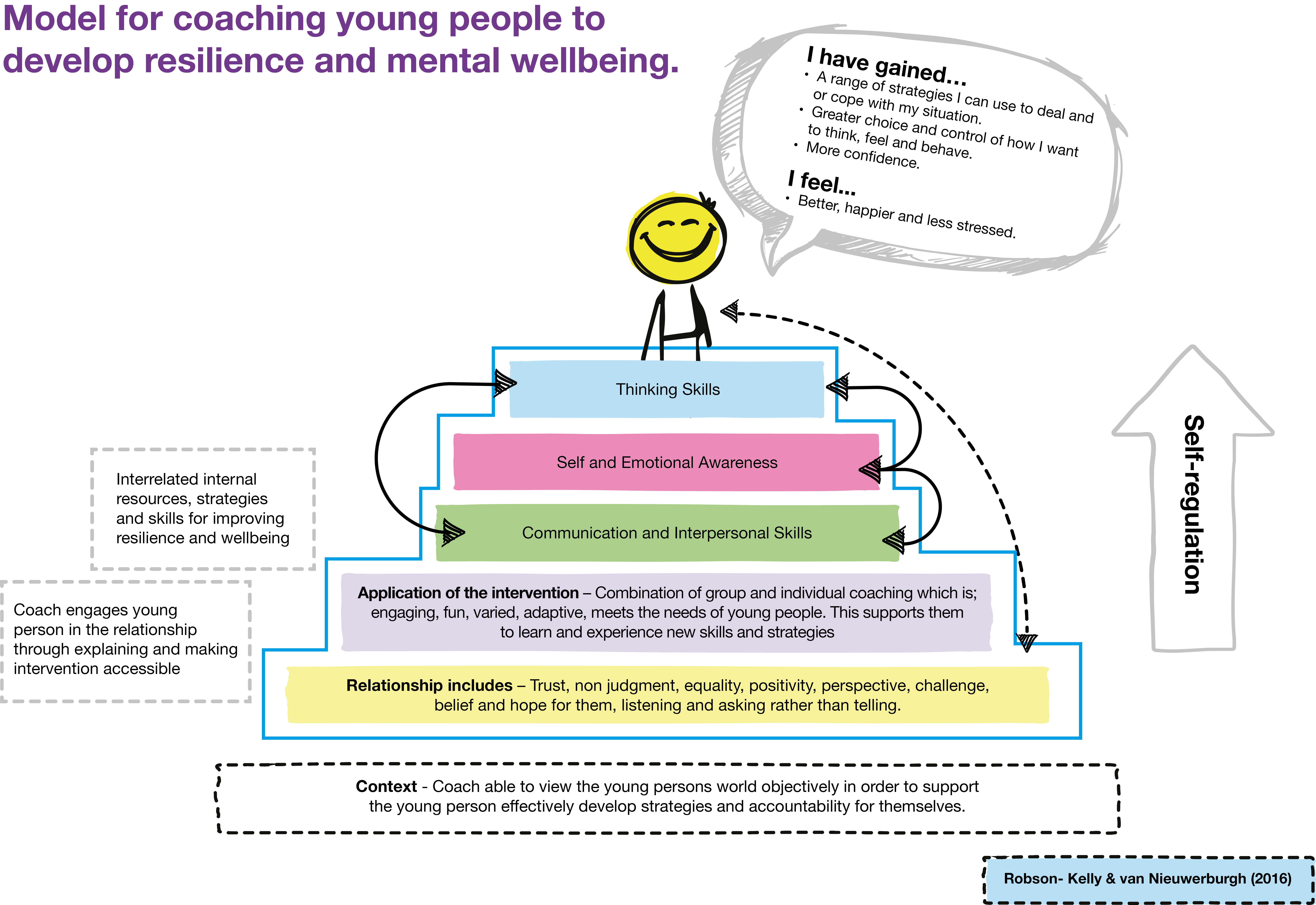
Communication and interpersonal skills. Through tools like body language awareness, understanding different types of behaviour, and learning to see situations from other people's perspectives, young people reported communicating more effectively, making more friends, feeling less alone, and taking more responsibility for how they treat others.
Self and emotional awareness. Through tools such as recognising personal strengths, understanding and labelling emotions, trust-building activities, and stress management techniques, young people described feeling calmer, more honest, more confident, and more able to trust themselves and others. Several talked about learning to think before reacting, and to use simple coping strategies like breathing or taking time out when things felt too much.
Thinking skills. Tools like reframing unhelpful thoughts, gaining perspective, goal-setting, and recognising what went well helped young people become more positive, more motivated, and more able to set and work towards their own goals rather than feeling stuck.
What ties all three together is something our research called developing accountability: young people gradually taking ownership of applying these skills themselves, in their own situations, rather than relying on someone else to solve the problem for them. That's the mechanism behind lasting change, and it's why wellbeing coaching, done well, builds resilience that outlasts the sessions themselves.
That last point matters enormously for schools focused on attainment. You cannot separate a student's ability to learn from their wellbeing. A student who is anxious, disengaged, or lacking confidence is not in a position to access the curriculum, however good the teaching is. Wellbeing Coaching addresses the barrier underneath the presenting issue or symptoms.
You don't need to overhaul your entire pastoral system to start. You need one trained coach: a pastoral lead, a senior leader, a mental health lead, a member of support staff, who understands how to build coaching relationships with the young people who need it most, and who has the skills, tools and confidence to deliver it well.
That's exactly what we help schools do.
Start with our free Introduction to Coaching Young People CPD bundle. It's a genuinely free set of webinars and training exploring how coaching works as targeted support for at-risk and disadvantaged students, including a real example of a senior leader using coaching in his own school. Access the free CPD bundle now
Try coaching your students. The best way to understand the impact of coaching is to start using it. Access our free "How to Explain Resilience Coaching" workbook, a practical tool to help you introduce coaching to students in a way that builds trust and buy-in from the first conversation. Get the free resilience coaching workbook
Ready to train as a student wellbeing coach? Join our accredited Coach Training programme and build the skills, confidence and credibility to deliver targeted coaching support in your school. Explore the accredited Coach Training programme
Every school has students who are languishing quietly, just out of reach of existing support. A trained coach in your building could be the difference between that continuing and that changing.
Refrence
Robson-Kelly, L., & van Nieuwerburgh, C. (2016). What does coaching have to offer to young people at risk of developing mental health problems? International Coaching Psychology Review, 11(1), 75–92.



LAST UPDATED:
October 16, 2026
Discover why accreditation, ethics, safeguarding and supervision matter for youth life coaches, and the accredited route to get there.
LAST UPDATED:
October 14, 2026
Discover how coaching builds SENCO capacity for early intervention and staff development, and how accredited coach training can help.


.svg)


