✖

Last Updated:
October 1, 2026
DETAILED GUIDE for ScHools and Colleges
Written By:
Liz Robson
The landscape of education is shifting in the UK. For decades, the primary focus of schooling has been academic attainment—exam results, league tables, and university admissions. While these remain crucial, there is a growing recognition among Senior Mental Health Leads, pastoral staff, and school leaders that academic success cannot exist in a vacuum. As mental health challenges among young people continue to rise, schools are searching for robust, evidence-based solutions that go beyond reactive fire-fighting.
Enter Positive Education. This is not about enforcing toxic positivity or simply hoping students "feel good." It is a rigorous, scientifically grounded approach that combines traditional education with the study of flourishing and wellbeing. It is about equipping young people with the life skills they need to thrive, not just survive at school and in life after school.

Our whole school approach to positive mental health and wellbeing, combines positive and organisational psychology theory with mental health in schools guidelines and recommendations. Our system model represents the dynamic way mental health and wellbeing is developed in schools and colleges. We use it to provide a framework for planning, developing and embedding school wellbeing.
In this comprehensive guide, we will explore what Positive Education actually is, the evidence backing its impact, and how your school can adopt a strategic approach to implementation. We will also share how we at Worth-it have spent over 15 years helping more than 500 schools navigate this journey, using the SEARCH framework (Waters & Loton, 2019) our strategic school wellbeing frameworks and coaching approach to build resilient school communities.
Positive Education is the application of positive psychology principles within an educational context. Positive psychology is the scientific study of what enables individuals and communities to flourish (Seligman & Csikszentmihalyi, 2000). When applied to education, this approach creates a dual-purpose system that focuses on developing wellbeing and character strengths in parallel with academic skills.
Martin Seligman, a key figure in positive psychology, described Positive Education as "education for both traditional skills and for happiness" (Seligman et al., 2009, p. 293). Expanding on this, Professor Lea Waters (2011) defines it as the intentional integration of the science of positive psychology with best-practice teaching methods to foster holistic student development. She argues that by embedding these principles, schools can proactively cultivate student resilience, emotional intelligence, and character strengths as core competencies alongside academic success.
.png)
There is a misconception that focusing on wellbeing detracts from academic rigour. Critics sometimes fear that time spent on "feelings" is time lost on mathematics or literacy. Positive Education challenges this binary thinking. It posits that wellbeing and learning are synergistic. Students who feel safe, connected, and confident are students who learn better.
Positive Education is not a single lesson taught once a week. It is an ethos that permeates the school culture. It influences how teachers interact with students, how discipline is handled, how staff support one another, and how the curriculum is delivered. It moves mental health support from a reactive model—waiting for a crisis to occur—to a preventative model, where all students are supported proactively to thrive.e equipped with the psychological immune system they need to handle life's challenges.
This approach is increasingly aligned with the latest requirements from Ofsted, particularly the 2025 Education Inspection Framework (EIF), which places a strong emphasis on strategic personal development and wellbeing. Schools are now required to demonstrate clear evidence of how they foster personal growth, mental health, and resilience among students.
Positive Education provides an actionable framework to meet these demands, embedding wellbeing into every aspect of school life and ensuring it is not treated as an afterthought, but as a central pillar of education. By integrating wellbeing and personal development into the curriculum, schools not only enhance academic outcomes but also meet the expectations set by Ofsted for a holistic approach to student success.
For Senior Mental Health Leads and school leaders and pastoral staff facing increasing caseloads and limited resources, the argument for Positive Education is often one of necessity. But does it work? The data suggests a resounding yes. Research consistently shows that when schools teach wellbeing skills, student outcomes improve across the board—socially, emotionally, and academically.
One of the most compelling arguments for Positive Education is its link to academic success. A landmark meta-analysis conducted by Durlak et al. (2011) reviewed 213 school-based social and emotional learning (SEL) programmes. The study found that students who participated in these programmes showed an 11-percentile-point gain in academic achievement compared to those who did not.
This challenges the notion that wellbeing initiatives compete with academic time. Instead, they enhance the cognitive availability of students. When anxiety is reduced and emotional regulation is improved, the brain is better primed for learning.
The preventative nature of Positive Education is vital in the current climate. Studies indicate that positive psychology interventions in schools can significantly reduce symptoms of depression and anxiety.
According to a review by Waters (2011), school-based positive psychology interventions have been shown to significantly increase student wellbeing and decrease symptoms of depression. By teaching students specific skills—such as identifying their strengths, practicing gratitude, and reframing negative thoughts—schools can act as a buffer against mental health disorders.
Furthermore, Seligman et al. (2009) highlighted in the Oxford Review of Education that Positive Education programmes could prevent depression and anxiety among students, increase their life satisfaction, and encourage social responsibility. This suggests that the skills learned are not just for the classroom, but are protective factors that students carry with them into their wider lives.
Positive Education places a heavy emphasis on relationships, recognising that a sense of belonging is a fundamental driver of wellbeing. When students feel connected to their peers and teachers, they are less likely to engage in risky behaviours and more likely to participate positively in the school community.
Crucially, Positive Education serves as a vital framework for early intervention. According to Noble and McGrath (2008), teaching proactive wellbeing strategies—such as emotional regulation and social skills—allows schools to identify and support at-risk students before more significant mental health issues escalate. By fostering a growth mindset and resilience, students learn that setbacks are not permanent failures but opportunities for growth. Evidence suggests that these early interventions improve classroom behaviour and significantly increase a student's ability to manage daily stressors throughout their lives.

Implementing Positive Education is not about buying a pre-packaged curriculum and hoping for the best. For it to be sustainable and effective, it requires a strategic, whole-school approach. This is where school leadership becomes critical.
Many schools suffer from what we call "initiative fatigue." They may have a mindfulness week in October, a resilience assembly in January, and a peer mentoring scheme that runs for a term before fizzling out. While well-intentioned, these isolated pockets of good practice rarely lead to cultural change.
Positive Education supports schools to develop a cohesive strategy. It provides a shared language and a unified framework that ties these disparate elements together. Instead of random activities, every intervention is part of a broader roadmap towards a flourishing school community.
In the UK, the focus on Personal Development in inspection frameworks (such as Ofsted) has intensified. Inspectors are looking for evidence that schools are preparing pupils for life in modern Britain, developing their character, and supporting their physical and mental health (Ofsted, 2025).
Positive Education provides the evidence base and the structure to meet these requirements robustly. It allows schools to demonstrate that their approach to personal development is planned, sequenced, and impactful. It shifts the focus from "what we did" (e.g., we held an assembly) to "what the impact was" (e.g., students now have the vocabulary to discuss their resilience).
A strategic approach recognises that you cannot pour from an empty cup. Positive Education strategies often begin with staff wellbeing. When teachers are trained in positive psychology principles, they not only model these behaviours for students but also experience reduced burnout and increased job satisfaction themselves.
By embedding these principles into school policies—behaviour policies, staff appraisals, and teaching and learning frameworks—Positive Education ensures that wellbeing is not an add-on, but the foundation upon which the school operates.
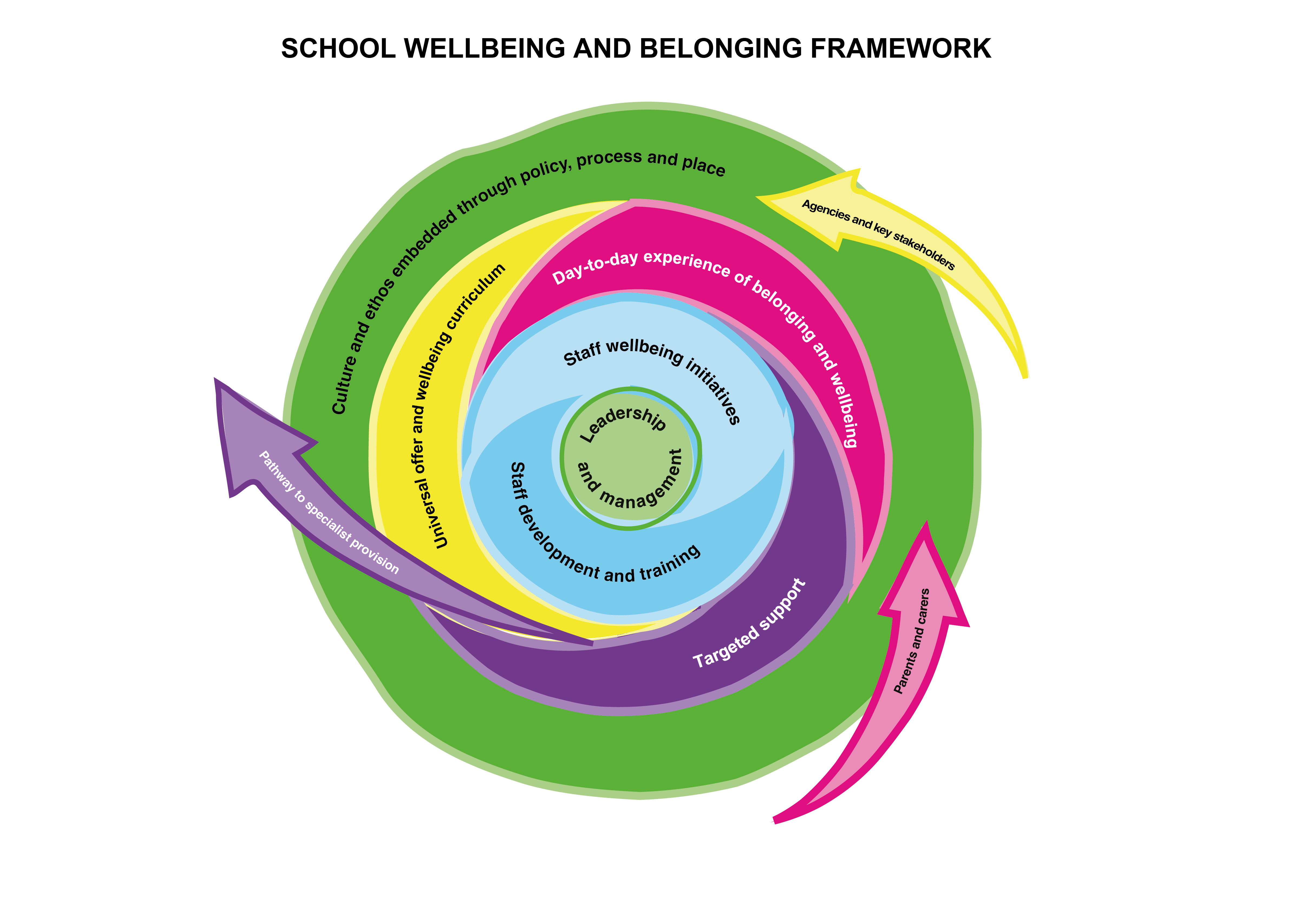
At Worth-it, we are not newcomers to the field of school wellbeing. For over 15 years, we have been at the forefront of the Positive Education movement in the UK. We have worked with over 500 schools nationally and internationally, supporting them to move from good intentions to sustainable impact.
Our journey began with a realisation that schools needed more than just resources; they needed a partner to help them navigate the complexities of mental health and wellbeing. We have seen the landscape change, from wellbeing being a "nice to have" to it being a statutory priority. Throughout this evolution, our mission has remained constant: to prevent mental health problems in young people by empowering schools to build comprehensive wellbeing strategies.
We understand the unique pressures of the UK education system (Robson-Kelly, 2018). We know that School Leaders, Pastoral Leaders and Senior Mental Health Leads are often juggling teaching commitments with safeguarding responsibilities. That is why our approach is practical, flexible, and grounded in the reality of school life. We don't just preach theory; we provide the tools to make it work on a rainy Tuesday in November.
Our credibility is built on results. We have supported schools in diverse contexts—from small rural primaries to large inner-city Multi-Academy Trusts (MATs). Our longevity in the sector is a testament to the effectiveness of our programmes and the trust schools place in us.
To help schools cut through the noise and develop a clear strategy, we utilise the SEARCH Positive Education framework (Waters, 2011). We chose SEARCH because it is evidence-based, memorable, and comprehensive. It allows schools to audit their current provision and identify gaps without feeling overwhelmed.
SEARCH stands for:
We use SEARCH as a diagnostic and planning tool. When a school works with us, we don't just hand them a generic plan. We look at their existing provision through the lens of SEARCH.
For example, a school might be doing excellent work on Relationships (R) through their pastoral care but lacking in explicit teaching of Coping (C) strategies. Or they might have strong Strengths (S) work in the classroom but haven't addressed Emotional Management (E).
This framework gives school leaders a clear structure to hang their strategy on. It simplifies the complex world of psychology into six actionable pillars. By ensuring that a school's strategy touches on all six areas of SEARCH, we ensure a holistic approach that leaves no stone unturned.

Our Positive Education Program offers a range of services designed to meet schools where they are, whether you are a single school looking to start your journey or a Multi-Academy Trust looking for a systemic solution.
For groups of schools, MATs, and commissioners (such as Local Authorities or Public Health teams), we offer bespoke consultancy. We partner with leadership teams to design and implement large-scale wellbeing strategies. As highlighted in the article "Enhancing learning through positive education, wellbeing and resilience" (Ellis & Robson-Kelly, 2018), this collaborative approach is key to embedding a sustainable culture of wellbeing. Our process involves auditing current provision, training executive or pastoral leaders, and using our tried and tested toolkit of resources to empower schools to create a culture of wellbeing across multiple sites. Our consultancy work ensures consistency and high standards of positive education across your entire network.
The Wellbeing Club is our flagship on-demand training and development programme for schools. It is designed specifically for the busy School Leaders, Pastoral Leads and Senior Mental Health Lead who needs flexible, high-quality wellbeing CPD.
The Wellbeing Club provides access to a library of e-learning courses, resources, and a community of like-minded professionals. It covers the 'how-to' of implementing a strategic approach to school wellbeing.
One School Mental Health Lead shared their experience with the Wellbeing Club:
"The review wheel has been a very useful tool to look at areas of strength and growth needed in our school. Wellbeing Club has helped me not to feel so overwhelmed by the enormity of the task ahead; we have taken on board small, sustained changes over a long period of time will eventually get us to where we want to be."
Another member noted the strategic benefit:
"Wellbeing Club has provided you with appropriate strategies, tools, resources and networks to plan for, implement and sustain a whole school approach."
It is not just about resources; it is about building your confidence to lead. As one participant put it: "I chose this one [Wellbeing Club] because I felt it suited our school, my style of learning, and would give practical ideas for improving our whole-school wellbeing. I have not been disappointed!"
Find out more about how schools have developed wellbeing with Wellbeing Club by signing up for our Free Mini Course.
Peer-to-peer support is one of the most powerful tools a school can utilise. Our Wellbeing Ambassadors program trains children and young people to lead wellbeing interventions themselves in their school.
This programme empowers students to support wider school wellbeing and pupil leadership strategies. It moves students from being passive recipients of support to active agents of change. The impact is profound, increasing the confidence of the ambassadors and reducing the stigma around mental health for the wider student body.
Feedback from our evaluations shows that this programme leads to "Increased confidence to make changes and encourage others to become part of a shared vision." It also helps establish "wellbeing ambassadors for peer-to-peer support," which is a sustainable way to increase capacity within the pastoral team.
Find out more about Wellbeing Ambassadors by signing up for our Introduction to Wellbeing Ambassadors webinar
Sometimes, students require more focused support than general classroom interventions can provide, yet they may not meet the criteria for clinical mental health services. This is where our Positive Psychology Coach Training makes a difference. Grounded in 15 years of experience and the academic work of our CEO and Founder (Robson-Kelly & van Nieuwerburgh, 2016), our approach is evidence-based and proven to create meaningful impact.
We equip your staff—teachers, teaching assistants, or pastoral workers—with the skills to become internal coaches. Through our training, they learn to deliver coaching interventions that help young people develop personally, overcome barriers to learning, and build academic resilience. This method bridges the gap between universal wellbeing support and clinical services, providing a practical, research-backed solution to foster positive change in education.
By upskilling staff with these evidence-based coaching techniques, schools create a layer of specialist support. When a student struggles with motivation or anxiety, a trained coach can intervene early, preventing issues from escalating and helping students flourish.
Find out more about how coaching supports young people by accessing our free Introduction to Coaching Young People Training.
Positive Education provides a strategic pathway to a school culture where academic rigour and human flourishing coexist. It represents a vital investment in the whole child that directly aligns with the Ofsted Education Inspection Framework (EIF).
By adopting evidence-based frameworks such as SEARCH, schools can move beyond reactive measures to meet specific inspection requirements:
With over 15 years of experience and a suite of proven programmes, Worth-it is ready to be your partner in this transformation. Whether you need to train a team of student ambassadors, upskill your staff as coaches, or develop a comprehensive strategy for your MAT, we have the expertise to support you.
Mental health challenges in schools are complex, but your strategy doesn't have to be. By focusing on strengths, building capacity, and using evidence-based frameworks, we can create schools where staff and students alike have the opportunity to thrive.
Ready to transform your school's approach to wellbeing? Explore our Wellbeing Club or contact us today to discuss how our consultancy services can support your vision. Find out more about our founder and CEO and her professional practice and academic work here.
References:


