Belonging in Schools: Practical Steps to Improve Belonging and Wellbeing
Written By:
Liz Robson
Belonging in schools has never mattered more. Every school wants pupils who feel safe, connected and ready to learn, yet only 63% of 15-year-olds in England say they feel they belong at school, and across many countries belonging has been falling for two decades.
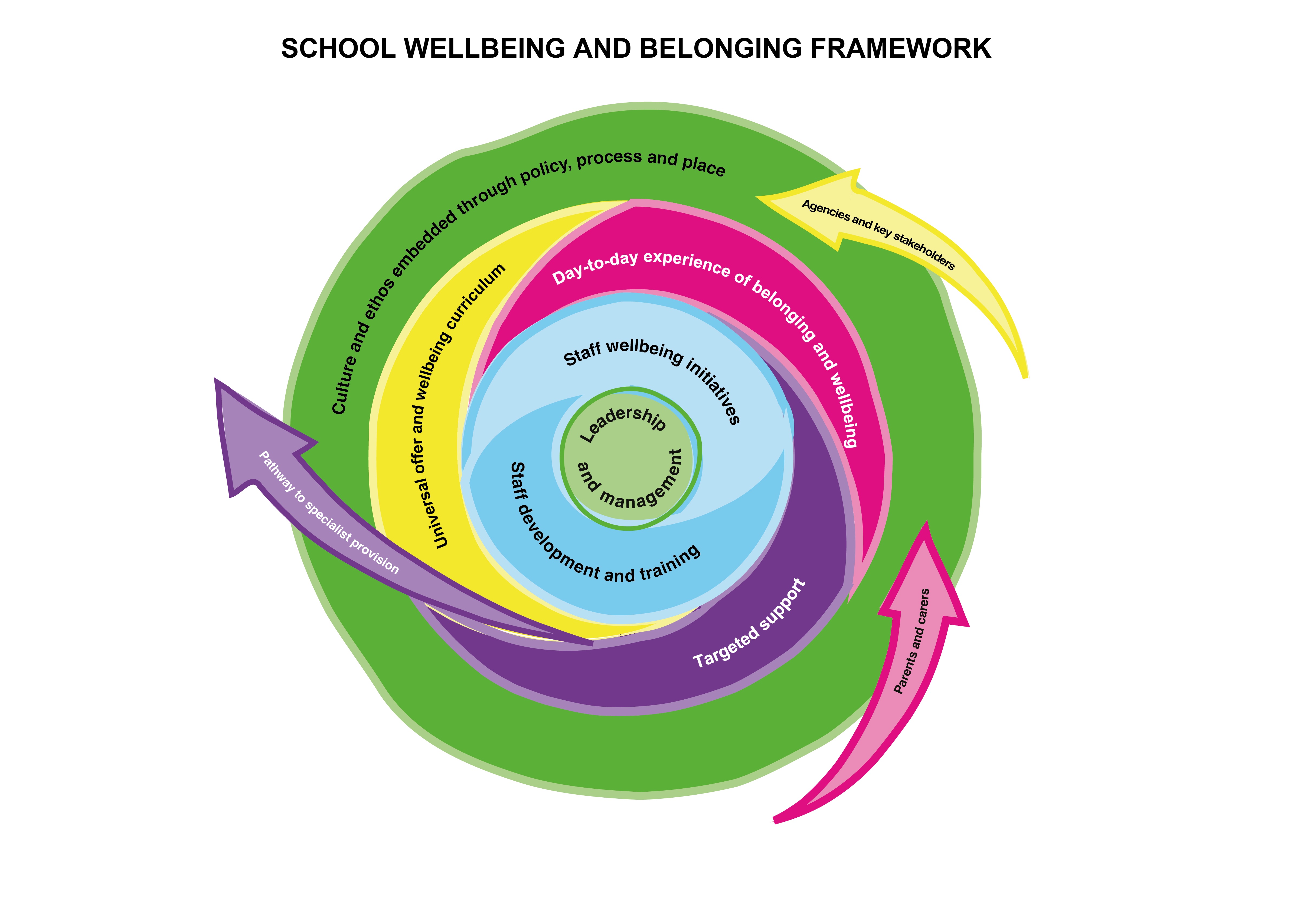
The good news is that belonging can be built. The research is now clear about what helps, and most of it comes down to everyday practice rather than expensive programmes. This guide sets out practical steps schools and settings can take, drawn from the latest evidence and organised around Worth-it's School Belonging and Wellbeing Framework.
Belonging and wellbeing go hand in hand
Belonging and wellbeing are not separate goals. Each one leads to the other.
When young people feel they belong, accepted, respected, safe and valued, their wellbeing improves. Belonging is consistently linked to lower rates of anxiety and depression, stronger engagement and better learning. And when young people's wellbeing is supported, they find it easier to belong: they have the confidence to join in, trust adults and peers, and recover from setbacks.
The reverse is also true. A major 2026 review for the International Baccalaureate describes how repeated experiences of not belonging can undermine wellbeing, and how poor wellbeing makes it harder to take part and trust others, so belonging becomes harder still. It is a cycle that can spiral down or up.
That has a practical message for schools: build belonging and reduce the things that threaten wellbeing, such as fear, distress, exclusion and chronic stress. Work on one strengthens the other.
What works for belonging in schools
Relationships come first. A meta-analysis of 51 studies found that teacher support was the factor most strongly linked to belonging, followed closely by positive personal characteristics such as hope, coping and self-esteem.
Whole-school approaches beat one-off activities. Approaches that work across classrooms, school culture, leadership and partnerships are more promising than isolated lessons or assemblies.
Three ingredients keep appearing. More effective approaches share relational safety and respect, practice that affirms young people's identities, and real opportunities for pupil agency, voice and strengths-based participation.
Belonging shows whether inclusion is working. A young person can be supported and still feel on the edge of school life. Belonging is the lived test of inclusion.
The International Baccalaureate review also describes belonging as built through four connected areas of a young person's experience. Whatever you put in place to improve belonging, whether that's a section of your school improvement plan, your inclusion strategy or a single new initiative, it is worth checking that it covers all four:
Opportunities: regular, meaningful chances to take part, contribute and connect, such as clubs, roles and collaborative learning.
Perceptions: everyday signals that adults and peers care, are fair and will respond when something goes wrong.
Competencies: the skills to make friends, repair conflict and ask for help, for young people and for staff.
Motivations: young people's confidence that if they try, they will be welcomed and supported.
Practical steps to improve belonging in schools, mapped to the framework
Worth-it's School Belonging and Wellbeing Framework organises whole-school belonging and wellbeing into 10 areas. Here are practical steps for each.
1. Leadership and management
Make belonging and wellbeing explicit priorities in your school improvement plan and inclusion strategy.
Choose a small number of high-impact actions and do them well, rather than adding more initiatives.
Protect belonging work from being crowded out by competing pressures.
2. Culture and ethos: policy, process and place
Agree a shared definition of belonging that pupils would recognise, and a shared language everyone uses.
Review behaviour, attendance and uniform policies through a belonging lens. Use restorative approaches that let young people repair harm and come back.
Make spaces welcoming, including calm areas any young person can use, not just those who are struggling.
3. Staff development and training
Train all staff, including support staff, in relationship-building, active listening and inclusive classroom routines.
Build coaching skills, so everyday conversations help young people set goals and find their own solutions.
4. Staff wellbeing
Look after staff belonging first. Schools with strong belonging say staff can't create it for young people unless they feel it themselves.
Protect workload, recognise contributions and model the relationships you want young people to copy.
5. Universal wellbeing curriculum
Teach the skills that make belonging possible: managing emotions, building relationships, coping with setbacks and setting goals. Positive education frameworks such as SEARCH give this a clear structure.
Make sure young people see their identities, cultures and communities reflected in what they learn.
Example of an incluive reading display
6. Day-to-day experience
Make sure every young person is known by name and as a person by several adults. Greet them at the gate and the classroom door.
Give young people a real voice, and close the loop with visible "you said, we did" updates. Consultation that changes nothing can harm belonging.
Give young people meaningful roles. Peer support programmes, where trained young people support each other and lead wellbeing campaigns, build belonging for those supporting and those being supported.
7. Targeted support and prevention
Spot early signs that a young person's belonging or wellbeing is slipping: changes in attendance, friendships or engagement.
Offer targeted wellbeing coaching. One-to-one, young-person-led coaching with a trusted adult helps them set goals, build confidence and coping, and reconnect with school. Because it is individual, it avoids grouping vulnerable young people together.
Plan for transitions, especially primary to secondary and mid-year arrivals, when belonging is most likely to dip.
8. Pathways to specialist support
Make sure young people, families and staff know how to ask for help and what happens next, beyond targeted support.
9. Parents and carers
Help families feel they belong too: positive, personal contact, a welcome at the gate, and events designed for different groups of parents.
Keep a relational, rather than punitive, tone on attendance.
10. Agencies and key stakeholders
Build trusted partnerships with community groups, Mental Health Support Teams and local services, so young people's support feels joined up.
Measure belonging, and act on what you find
Ask young people regularly and simply, for example "I feel like I belong at school", alongside attendance, participation and wellbeing data. Look at results for different groups, because averages can hide those who feel least connected. Tell young people and families why you are asking, and always follow up: belonging data creates a responsibility to act. The Schools White Paper expects every school to monitor belonging by 2029, so starting now puts you ahead.
15 years of leading belonging interventions
Worth-it has been leading belonging interventions in schools and youth settings for 15 years. Our work brings together positive psychology, coaching psychology and organisational psychology in three ways:
Pupil voice and peer support. Our Wellbeing Ambassadors programme trains young people to support their peers, lead wellbeing campaigns and help shape their school, building belonging and positive relationships from the inside.
Culture change. We help leaders build cultures of wellbeing and positive relationships across the whole school, using the School Belonging and Wellbeing Framework. We have a new Leading School Wellbeing Course starting in December register your intrest here
Targeted support through wellbeing coaching. We train staff as adolescent wellbeing coaches and provide coaching for young people who need extra support, helping them reconnect, build resilience and believe more is possible.
Not sure where to start?
Try our free Wellbeing and Inclusion Planning Tool. It takes you through 6 simple questions and gives you a clear starting point for building belonging and wellbeing in your school or setting.
Free resources to get you started
Peer Support Info Pack: how pupil-led peer support builds belonging. Download here.
Primary School Peer Supprt Webinar: learn how to build wellbeing and belonging with pupils. Access here
Introduction to Wellbeing Ambassadors webinar: learn about the programme and how it improves wellbeing and belonging. Access here.
Introduction to Coaching Young People: a free course on coaching approaches. Access here.
References
Allen, K., Kern, M. L., Vella-Brodrick, D., Hattie, J., & Waters, L. (2018). What schools need to know about fostering school belonging: A meta-analysis. Educational Psychology Review, 30, 1–34.
Allen, K.-A., & Dong, S. (2026). The science of belonging. Monash University with the International Baccalaureate.
Banerjee, P. (2026). School belonging and attainment at key stage 4: linked data study. Department for Education (RR1645).
Bohling, K., et al. (2026). School belonging case studies. Department for Education (RR1664).
Department for Education (2026). Every Child Achieving and Thriving (Schools White Paper).
Waters, L., & Loton, D. (2019). SEARCH: A meta-framework and review of the field of positive education. International Journal of Applied Positive Psychology, 4, 1–46.