✖

Updated:
November 24, 2026
Written By:
Liz Robson
Every school wants pupils to feel they belong. Building that feeling across a large and diverse community, every day, is much harder.
St Lawrence College is a British international school in the suburbs of Athens. Around 1,000 pupils from 56 countries learn there. Over the past two years, the school has trained 54 Wellbeing Ambassadors from Years 10 to 13. Together, these young people have helped create a culture where pupils feel safe, known and welcome. The ambassadors have also grown in confidence, leadership and character along the way.
Deputy Head Victoria Walters is clear about the scale of the change:
"I don't think I've introduced anything as Deputy Head... that for the children and for us as a school has made more of a difference."
This article looks at how St Lawrence College made belonging a whole-school priority, how pupils led that change, and why student leadership matters for employability, personal development and wellbeing.
Belonging is not something a single assembly or poster campaign can create. Pupils feel they belong when they are safe, included, recognised as individuals, connected to others and part of a shared school identity. These feelings are built through relationships and everyday experiences, not stated values alone.
The evidence shows a strong cycle at work. Pupils who feel valued and safe are more willing to attend. Better attendance makes engagement and progress possible. That success then strengthens their sense of belonging even further.
Pupil agency is one of the strongest drivers of this cycle. Ambassador roles and student-led clubs work best when pupils can see their ideas turn into real change. Token consultation can do more harm than good. St Lawrence College gave its pupils genuine ownership, and the results show why that matters.
Victoria explains her thinking:
"I'm very much a supporter of pupil-led change within school, because I really think it can be effective... it's become a major programme within our school for pastoral care."
A group of 54 ambassadors needs a clear structure. The pupils organised themselves into three action groups, each focused on a theme they had chosen:
Each group is supported by one member of staff, two school counsellors, and Victoria, the Deputy Head for Pastoral Care. The groups meet regularly. Victoria describes ambassadors arriving at their weekly meetings organised and prepared, with realistic action plans, ready to design materials and deliver their ideas with very little adult direction.
The strands also give each ambassador a team of their own. The young people leading the work on belonging feel that same sense of connection and purpose themselves.
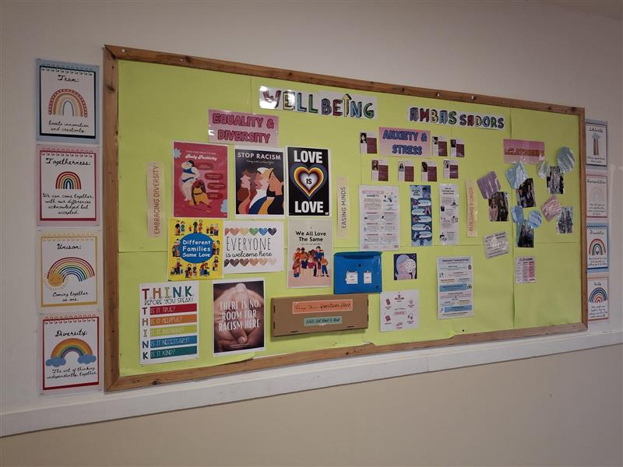
Belonging is often felt in ordinary moments. A familiar face at the start of the day. A club where nobody is left out. A peer who notices when someone seems quiet. The ambassadors' initiatives were designed around exactly these moments.
Moving to senior school is one of the biggest pressure points for belonging. To ease the move, every Year 7 form was paired with two or three ambassadors who ran weekly morning check-ins. The ambassadors also:
Victoria says this work "relieved a bit of the stress of them coming to senior school." New pupils now arrive already knowing friendly older faces who are looking out for them.
Some of the best ideas are the simplest. The ambassadors set up a weekly lunchtime Board Games Club for pupils who feel lonely, anxious or are struggling with friendships.
The club works because it is low-pressure. There is no need for intense eye contact or forced conversation. Pupils sit down, join a game and connect at their own pace. For young people who would never walk into a formal support session, it offers a dignified and easy way in.
With 56 nationalities in one school, the Equality and Diversity group saw a chance to turn difference into shared pride. Their Culture Week included multilingual greeting videos, K-pop and Greek dancing at lunchtime, national dress, international food stalls, calligraphy workshops and a pupil-compiled electronic Cultural Cookbook.
Culture Week let pupils bring their whole selves to school while celebrating a shared school identity. That balance sits at the heart of inclusion and belonging.
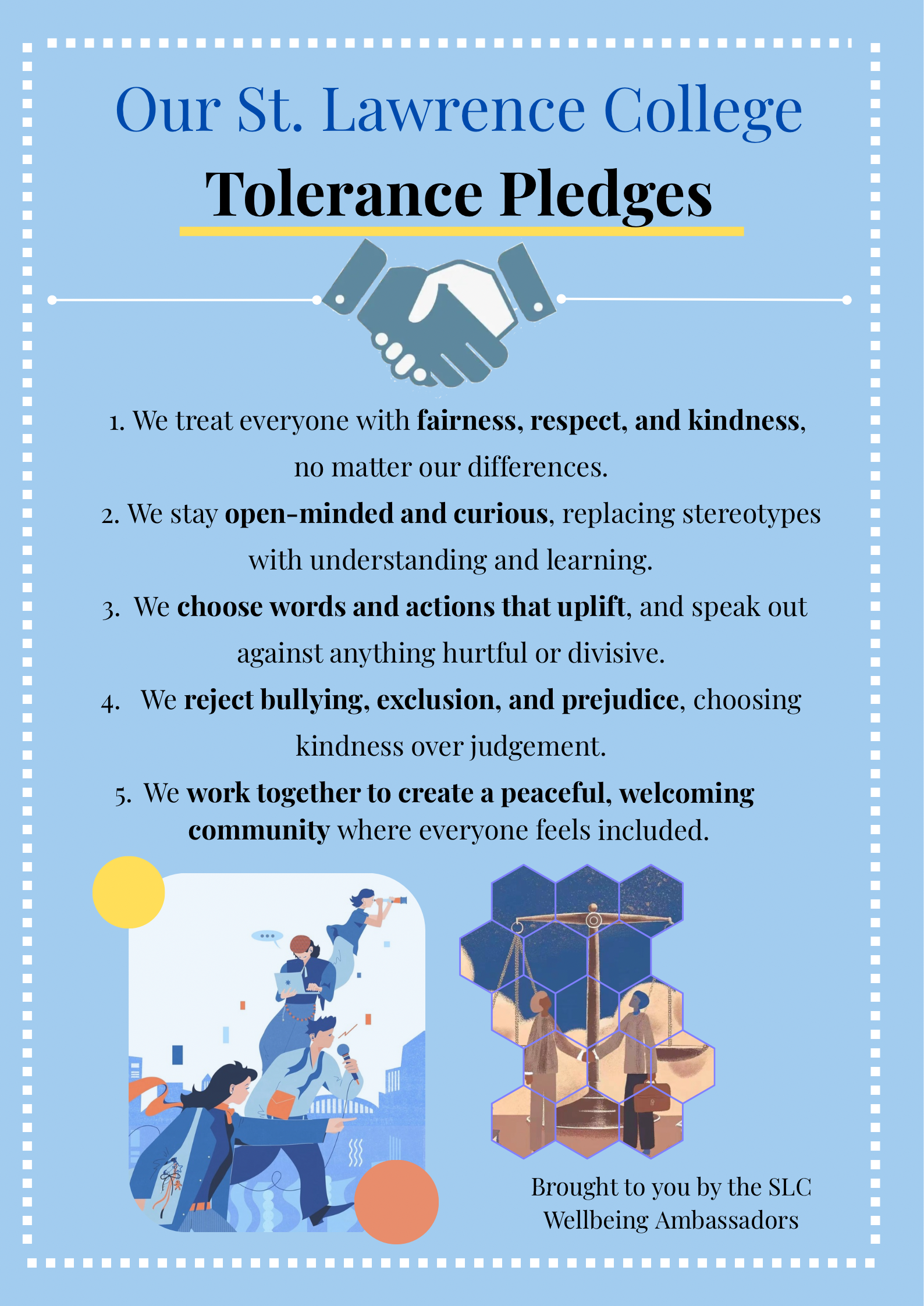
One of the ambassadors' most visible achievements is a set of tolerance pledges, written by pupils for pupils and displayed in every classroom. Each pledge promotes positive relationships and a sense of belonging across the school community.
Brought to you by the SLC Wellbeing Ambassadors
Values written in a policy can feel distant. Values written by peers, and seen in every lesson, feel shared and lived. The pledges give every pupil a common language for how the community treats one another, and permission to speak up when something is wrong.
The impact on wellbeing has been significant. Victoria describes the programme as playing a:
"massive part in making a culture of the school that it's okay, genuinely not to be okay."
That culture is the foundation of the school's early mental health support. When pupils feel able to talk about how they're feeling, concerns surface sooner, before they grow into bigger difficulties that affect wellbeing, engagement and attendance. Peer-led initiatives make this possible by giving pupils a trusted, relatable person to turn to at the first sign of a worry. Staff can then step in with the right support, earlier.
That openness gives pupils, in her words, "the okay to speak and for them to know they're going to be heard." Badges, "it's ok not to be ok!" t-shirts, assemblies and staff-inclusive Tea and Talk sessions keep the message visible. They also help make early support part of everyday school life, rather than something pupils only hear about once a problem has escalated.
Peer support must be safe. Ambassadors at St Lawrence College are trained to understand that they are peer supporters, not school counsellors, with clear routes for passing concerns to staff.
That training has been tested. When younger pupils shared serious worries with ambassadors, the response was exactly right. Victoria explains:
"They got it right, they've remembered what we've told them in the training, [and] they've come and spoken to [the staff]."
Because pupils trust the ambassadors, concerns that may otherwise have stayed hidden reached the right adults. For any Senior Mental Health Lead or safeguarding officer, this is the reassurance that matters most. Well-trained peer support strengthens your safeguarding culture rather than replacing it.
The benefits do not stop with the pupils being supported. The ambassadors themselves grow in ways that will shape their futures.
Victoria describes the skills ambassadors develop as "dealing with people, decisions, leading empathy." Listening, being reliable and being responsible came up again and again in conversation about what the role builds.
These are the skills employers value most. Victoria believes they "will make them really good employees in the future," and she sees them as essential to a rounded education:
"That sets apart a great education from just an education."
One leading ambassador won the headmaster's prize for contribution to the school, then spent a gap year teaching English in Sri Lanka, drawing on the leadership skills built through the programme.
Leading real change builds confidence, autonomy and stronger relationships. Victoria notes that the role:
"helps them to develop those skills to deal with people."
She also sees how deeply it shapes character, saying it "really makes them into the person they're going to be by the time they graduate." The role attracts young people who want to "give back to the school, and invest in other people", and it rewards that generosity with growth.
Belonging works both ways. Research shows that structured peer roles build belonging for the helper as well as the person being helped. The ambassadors feel valued, connected and recognised, including through a thank-you beach trip that celebrated their contribution.
It is no surprise that Victoria knows what she will highlight to inspectors:
"If the inspectors are asking me... what aspects of your pastoral care... are you really proud of? Without a doubt, this will be the first thing I'll be mentioning."
Every school is different, but these steps can be adapted to primary, secondary and FE settings:
St Lawrence College shows what is possible when young people are trusted, trained and given space to lead. Their culture of belonging grew from a structured, evidence-based approach with pupil voice at its heart.
Our Wellbeing Ambassadors Programme gives your school the same foundations. Grounded in positive psychology and the SEARCH framework, it uses a flexible train-the-trainer model. Your staff complete a short online facilitator course, then use a full delivery toolkit to train your own ambassadors safely. You also receive ongoing support through drop-in calls with programme founder Liz Robson, so you are never doing this alone.
It is a practical way to build belonging, inclusion and early support across your whole school community, while developing the leadership and life skills your pupils will carry far beyond the school gates.
Join our free Wellbeing Ambassadors webinar to see how the programme works, how other schools are using it, and how it could fit your priorities for the year ahead.
Want to explore how peer support aligns with Ofsted requirements? Download our peer support info pack for clear, practical guidance you can share with your senior leadership team.
Download the peer support info pack
Want to understand how peer support boosts wellbeing and positive mental health for students? Download our Wellbeing Ambassadors cheat sheet for a quick, easy-to-follow overview.
Download the Wellbeing Ambassadors cheat sheet
Your pupils already know what helps them feel they belong. Give them the skills and support to lead, and they can help every pupil feel the same.



LAST UPDATED:
November 24, 2026
Discover how St Lawrence College fostered a sense of belonging and improved student well-being through impactful student leadership.

LAST UPDATED:
November 24, 2026
Discover how fostering inclusion in schools through a focus on student wellbeing can enhance engagement and improve outcomes.


