✖

Updated:
January 30, 2026
Written By:
Liz Robson
For school leaders, the rising tide of student anxiety and mental health needs can feel overwhelming. Pastoral teams are stretched, and finding sustainable and effective solutions is a constant challenge. But what if one of your most powerful resources was already walking the corridors of your school? Student leadership is emerging not just as a desirable extracurricular or enrichment activity, but as a cornerstone of a successful whole-school approach to mental health, wellbeing and resilience.
Research consistently shows that when students are given meaningful leadership roles—as peer mentors, mental health champions, or wellbeing ambassadors—the benefits ripple across the entire school community. This isn't about adding another task to your plate; it's about strategically empowering students to become active partners in building a culture of positive mental health.
The link between student leadership and improved mental health isn't just anecdotal. A growing body of research identifies clear mechanisms through which these roles foster resilience, belonging, and agency.
A core principle of wellbeing is agency—the feeling of control over your own life and choices. Research based on self-determination theory (Deci & Ryan,1985) shows that when students take on leadership roles, they develop a stronger sense of purpose and motivation. This is crucial for their mental health. One empirical study in secondary schools found a direct link between students identifying as leaders and having higher levels of hope and wellbeing (Sims & Thompson, 2020).
Taking on a leadership role transforms a student from a passive recipient of support into an active agent of change. This sense of ownership is incredibly empowering and builds the resilience needed to navigate life's challenges.
UK government guidance consistently highlights that a sense of belonging to school is a key protective factor for young people's mental health (PHE, 2021). Student leadership roles naturally expand peer networks and deepen social connections. When students work together on meaningful projects, they build positive relationships founded on trust and shared purpose.
This is particularly important in a school environment where friendship issues and social isolation can significantly impact wellbeing. Peer leaders create a visible network of support, helping to ensure no student feels invisible or alone.
One of the biggest challenges in school mental health is ensuring that the support offered is relevant and accessible to students. Pupil voice is not just a box-ticking exercise; it is essential for designing interventions that actually work. When students help to shape pastoral systems and wellbeing initiatives, the uptake and effectiveness increase dramatically.
Guidance from the Department for Education (DfE, 2021) and Public Health England (PHE, 2021) explicitly identifies pupil involvement as a vital component of any whole-school mental health strategy (NIHR). By co-designing wellbeing lessons or shaping anti-bullying policies, student leaders ensure that the support on offer truly meets the needs of their peers.
The Wellbeing Ambassadors Programme is designed specifically to align with this evidence-based model. It provides a structured framework for training students to become effective peer leaders who can champion mental health initiatives. The programme equips students with essential skills while ensuring they are fully supported by staff, creating a powerful synergy between student-led action and the school's formal pastoral systems.
Integrating student leadership into your school's culture is a powerful way to align with the Ofsted Education Inspection Framework (EIF). When students take the lead, they don't just help others—they develop the character and resilience that Ofsted looks for under Personal Development and Leadership and Management.
Evidence from the National Institute for Health and Care Research (NIHR) and the Department for Education (DfE) consistently shows that the most successful mental health outcomes occur when leadership is embedded within a comprehensive whole-school framework.
Effective leaders don’t just manage; they empower. By creating a culture where student voices inform school policy, you demonstrate a commitment to inclusive leadership that values the input of every stakeholder (Ofsted, 2025).
Student leadership must be accessible to all. When you involve pupils from diverse backgrounds—including those with SEND or those from disadvantaged backgrounds—you foster a sense of belonging and ensure that wellbeing interventions are equitable and relevant.
Providing leadership opportunities is a practical way to build 'character.' It encourages pupils to become confident, resilient, and independent citizens who understand how to look after their own and others’ mental health.
While student leadership cannot replace professional pastoral care, it acts as a vital "force multiplier." It reinforces curriculum learning and staff-led initiatives, creating a supportive environment where wellbeing is everyone’s business.
By following these integrated strategies, you are not only meeting statutory requirements but are actively nurturing a thriving, supportive school community where every young person has the chance to lead and grow.
The evidence supporting the role of student leadership in wellbeing includes small- to medium-scale empirical studies, mixed-method evaluations, and sector reports (Mager & Nowak, 2012; Mitra, 2009). While causality is difficult to isolate due to limited large-scale randomised trials, the correlation between leadership roles and improved wellbeing, self-efficacy, and school climate is well-documented (Eccles & Roeser, 2011).
To ensure positive outcomes, schools must avoid tokenism or overburdening students with emotional labour. Guidance stresses the importance of proper training for leadership roles, safeguarding measures, and clear boundaries to prevent harm or burnout for student leaders (Fielding, 2001; Robinson & Taylor, 2007)
DfE guidance emphasises the value of pupil voice within whole-school wellbeing strategies, including student involvement in policy development, co-design of wellbeing lessons, and implementation of mental health programs (Department for Education, 2021). Practical examples, shared in case studies, endorse the integration of student leadership as a recommended—not standalone—element of mental health and wellbeing strategies (Weare & Nind, 2011).
Research from coaching psychology and positive psychology shows that combining these approaches in schools can boost student leadership and wellbeing by enhancing goal-setting, hope, resilience, and overall life satisfaction. Studies on coaching for adolescents highlight that evidence-based coaching interventions led by trained professionals improve hope, coping skills, and cognitive hardiness, while reducing depressive symptoms and fostering better attitudes toward learning.
Both fields emphasise building on resources and fostering optimal functioning. When integrated into peer led or student leadership programmes, they can reinforce leadership development, problem-solving, and adaptive coping skills. This combination provides both theoretical and practical support for using coaching and positive psychology to enhance student leadership while promoting wellbeing in schools (Green, Oades, & Robinson, 2019).
Our Wellbeing Ambassadors programme draws heavily from the fields of positive psychology and coaching approaches, providing a robust and evidence-based foundation for fostering student wellbeing and leadership. By applying the SEARCH positive education framework Waters & Loton, 2019), the programme emphasises stress management, emotional management, resilience, coping strategies, and fostering healthy connections within the school community. This approach is further enriched by integrating the work of Robson-Kelly and Van Nieuwerburgh (2016), who highlight the importance of combining coaching principles with positive psychology to create empowering, voice-led initiatives. These elements work together to equip Wellbeing Ambassadors with the skills to support their peers, promote resilience, and contribute to a thriving school environment.
Translating theory into practice can seem daunting. However, implementing a successful student-led wellbeing programme is achievable with a clear, strategic plan. Based on research findings and government guidance, here are five evidence-based recommendations for your school.
For student leadership to be effective, it must be connected to the school's core structures. Link your student leaders directly with the Senior Mental Health Lead and pastoral team. Ensure their input helps shape the PSHE and RSE curriculum. This creates a feedback loop where student voice genuinely informs school wellbeing policy and delivery, moving it from a standalone club to an integral part of your wellbeing provision and personal development programme.
A significant risk of peer support is placing too much emotional labour on untrained students. It is crucial to provide comprehensive training that equips them with the right skills. Our Wellbeing Ambassadors Programme focuses on teaching active listening, identifying when a peer needs help, and understanding the clear referral routes for escalating concerns to a staff member. Safeguarding is paramount. Student leaders must understand that they are signposters and positive role models, not counsellors. This protects both the ambassador and their peers.
Tokenistic roles can be more harmful than helpful. To foster genuine agency, student leadership must lead to real, visible change. Offer a variety of roles—from running awareness campaigns and peer mentoring younger students to providing input on school policies. Crucially, ensure your leadership team is diverse and represents a true cross-section of your student body, including different year groups, backgrounds, and SEND profiles. This promotes inclusion and ensures that a wider range of voices are heard.
Student leadership should not mean students are left to their own devices. Connect your Wellbeing Ambassadors or student council to a named senior leader who will remain responsible for ongoing supervision and support. This ensures their ideas are heard and translated into action. It also provides a clear line of management for handling any welfare or safeguarding issues safely and effectively. This structure aligns with DfE expectations for strategic leadership in mental health and ensures the programme is sustainable.
To understand your impact and secure future investment, it is vital to measure what you are doing. Track activity, such as the number of projects completed or meetings held. Use student surveys to gauge process indicators like their satisfaction and sense of agency. Finally, measure wellbeing outcomes using validated scales, and look at school-level data such as attendance figures and behaviour referrals. This data will provide a powerful case for the value of your programme.
To further illustrate the effectiveness of your approach and provide a model of success, our case studies the Three Years of Impact study conducted by a Wellbeing Ambassadors Programme School Kings Chester. This impact review highlights how a dedicated focus on student lead mental health and wellbeing, using evidence-based frameworks and consistent measurement, can yield tangible results. The study showcases the school’s progress in reducing student mental health issues, increasing early prevention and fostering positive relationships through peer-led initiatives. Sharing such examples not only strengthens your case for implementing similar strategies but also offers practical insights into what works in real-world school settings.
There is consistent moderate evidence from qualitative studies, case evaluations, and sector reviews demonstrating that student leadership supports wellbeing when delivered as part of a whole-school approach. While large-scale causal trials are scarce, the wealth of positive correlational data and practical success stories from schools makes a compelling case. The most effective approach is to implement peer leadership alongside other proven strategies and monitor your outcomes closely.
The Wellbeing Ambassadors Programme provides the evidence-based framework, training resources, and strategic guidance to help you do just that. It empowers you to build a sustainable, student-led wellbeing culture that can transform your school community.
The Wellbeing Ambassadors Programme empowers schools to create peer leadership initiatives focused on mental health and wellbeing. It provides tools, training, and resources to build a supportive and inclusive school environment.
The programme equips students and staff with skills and confidence through evidence-based materials aligned with frameworks like SEARCH and positive education principles.
Schools receive guidance on establishing and running a Wellbeing Ambassadors team, including student selection, training, and peer-led initiatives.
A comprehensive toolkit includes templates, posters, and strategies to embed the programme into the school culture.
The programme promotes resilience, reduces mental health challenges, improves engagement, and fosters a whole-school approach to wellbeing.
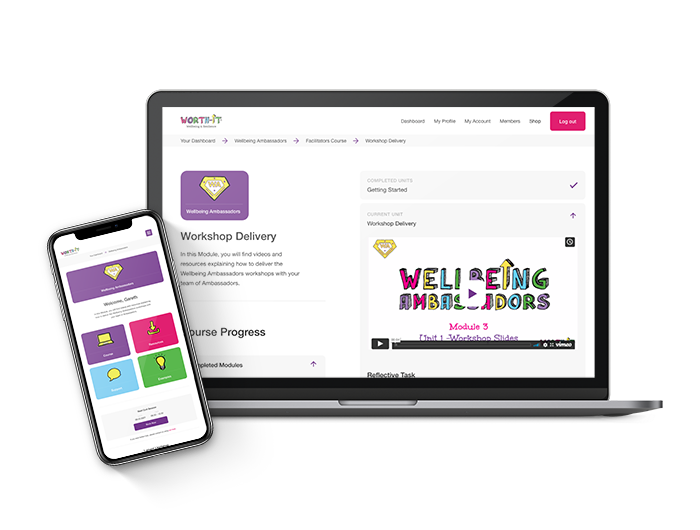
Empower your students to lead the way in fostering a positive mental health culture in your school. Our Wellbeing Ambassadors Programme is an evidence-based approach that equips students with the tools and confidence to support their peers, promoting resilience and connection throughout your school community.
Take the first step toward building a sustainable, student-driven wellbeing culture. Sign up now to join the Wellbeing Ambassadors Programme and transform your approach to mental health support.Or...Take the Next Step
Empower your school community by equipping students to lead peer wellbeing initiatives with our Wellbeing Ambassadors program. Discover how this program can transform your school’s approach to mental health and create a supportive, thriving environment for all.
References
Deci, E. L., & Ryan, R. M. (1985). Self-determination theory. In E. L. Deci & R. M. Ryan, Intrinsic motivation and self-determination in human behavior (pp. 3–36). Springer. https://doi.org/10.1007/978-1-4899-2271-7_1
Department for Education. (2021). Promoting and supporting mental health and wellbeing in schools and colleges. GOV.UK. https://www.gov.uk/government/publications/mental-health-and-wellbeing-support-in-schools-and-colleges
Eccles, J. S., & Roeser, R. W. (2011). Schools as Developmental Contexts during Adolescence. Journal of Research on Adolescence, 21(1), 225-241.
Fielding, M. (2001). Students as radical agents of change. Journal of Educational Change, 2(2), 123-141.
Green, L. S., Oades, L. G., & Robinson, P. L. (2019). Positive education programmes: Integrating coaching and positive psychology in schools. In Positive psychology coaching in practice (pp. 81–99). Routledge. https://doi.org/10.4324/9780429473036-7
Mitra, D. L. (2009). Student Voice in School Reform. Educational Forum, 73(3), 219-230.
National Institute for Health and Care Research. (n.d.). Mental health support in schools. NIHR. https://www.nihr.ac.uk
NIHR (2022). Public health research: interventions to support mental health in schools.
Nowak, P. (2012). Effects of Student Participation in Decision-Making at School. Journal of Educational Research, 55(1), 1-9.
Public Health England. (2021). Promoting children and young people’s mental health and wellbeing: A whole school and college approach. Public Health England. https://www.gov.uk/government/publications/promoting-children-and-young-peoples-emotional-health-and-wellbeing
Robson-Kelly, E. & van Nieuwerburgh, C. (2016). What does coaching have to offer young people at risk of developing mental health problems? A grounded theory study. International Coaching Psychology Review, 11 (1), pp. 75-92.
Sims, Ceri M. and Thompson, Paul (2020) The effect of student leadership roles and behaviours on motivation and well-being. Journal of the Institute of Teaching and Learning. pp. 42-43.
Waters, L., & Loton, D. (2019). SEARCH: A meta-framework and review of the field of positive education. International Journal of Applied Positive Psychology, 4(1), 1-46. https://doi.org/10.1007/s41042-019-00017-4
Weare, K., & Nind, M. (2011). Mental health promotion and problem prevention in schools: What does the evidence say?. Health Promotion International, 26(S1), i29–i69. https://doi.org/10.1093/heapro/dar075


.jpg)

LAST UPDATED:
October 1, 2026
Discover what the research says about why pupils struggle to feel they belong at school, from weak staff relationships and peer exclusion to

LAST UPDATED:
September 30, 2026
Confused by "targeted support" or "Targeted Plus"? A clear, practical explainer for school staff on what these mean, and where to start.


.svg)


