✖

Updated:
February 4, 2026
Written By:
Liz Robson
The focus on mental health in primary schools is no longer a "nice-to-have" — it is a fundamental aspect of creating a successful learning environment. As a school leader, you understand that children who feel happy, safe, and understood are children who learn more effectively. However, knowing what to do and how to do it can be a significant challenge, especially when trying to fit wellbeing into an already packed curriculum.
The good news is that fostering primary school wellbeing does not have to be another initiative that fizzles out. By adopting a strategic approach, you can create a sustainable culture of positive mental health and wellbeing that supports pupils and staff alike, while also aligning with key Ofsted recommendations.
In this guide, we will explore practical tips for what wellbeing looks like in a primary school, share success stories, and introduce the evidence-based frameworks we use to help schools build a culture of wellbeing, resilience and inclusion.
Wellbeing in primary schools can sometimes feel intangible. It is more than just a weekly PSHE lesson or a poster on the wall. It is the combination of explicit teaching and the implicit, everyday experiences of children at school that boost wellbeing and positive relationships.
When done right, it is a wellbeing culture that permeates every classroom, the playground, the staff room and the whole school ethos.
Practical strategies for fostering a wellbeing in primary schools include:
The key challenge is moving from well-intentioned but isolated activities to a cohesive strategy. This is where a clear school wellbeing framework is invaluable.

Primary wellbeing tree display
At Worth-it, we base our approach on the evidence-based SEARCH Pathways to Wellbeing (Waters & Loton, 2019). This framework provides a structured yet flexible framework for schools to plan, evaluate, and embed wellbeing across the curriculum and daily life.
SEARCH stands for:
This comprehensive evidence-based wellbeing framework ensures schools strengthen all the key pillars of wellbeing—guiding children to identify their own character strengths, build emotional regulation skills, nurture positive relationships, and develop habits for lifelong resilience.
Our strategic wellbeing framework expands on the SEARCH approach by embedding its core strategies throughout every layer of school life, fostering a culture where wellbeing is central to learning, relationships, and overall school success. By integrating character strengths, emotional management, awareness, relationships, coping mechanisms, and goal-setting into the curriculum, ethos, and daily interactions, schools create an environment where every student and staff member can thrive.
This framework is designed to help you lead your primary school's wellbeing strategy, ensuring that wellbeing becomes a shared responsibility across leadership, teaching staff, pastoral teams, and non-teaching roles. The strategies are applied through intentional curriculum design, delivering lessons with a focus on wellbeing outcomes while also weaving these principles into the school's broader culture and day-to-day operations.
For staff, our framework supports sustained professional development by equipping them with tools to promote their own mental resilience and confidently model positive habits. For students, it builds a sense of belonging by encouraging peer support and strengthening connections within the school community. By embedding wellbeing into the very fabric of the school, our approach empowers leaders, teachers, and students to achieve lasting positive outcomes that enhance both academic performance and mental health.
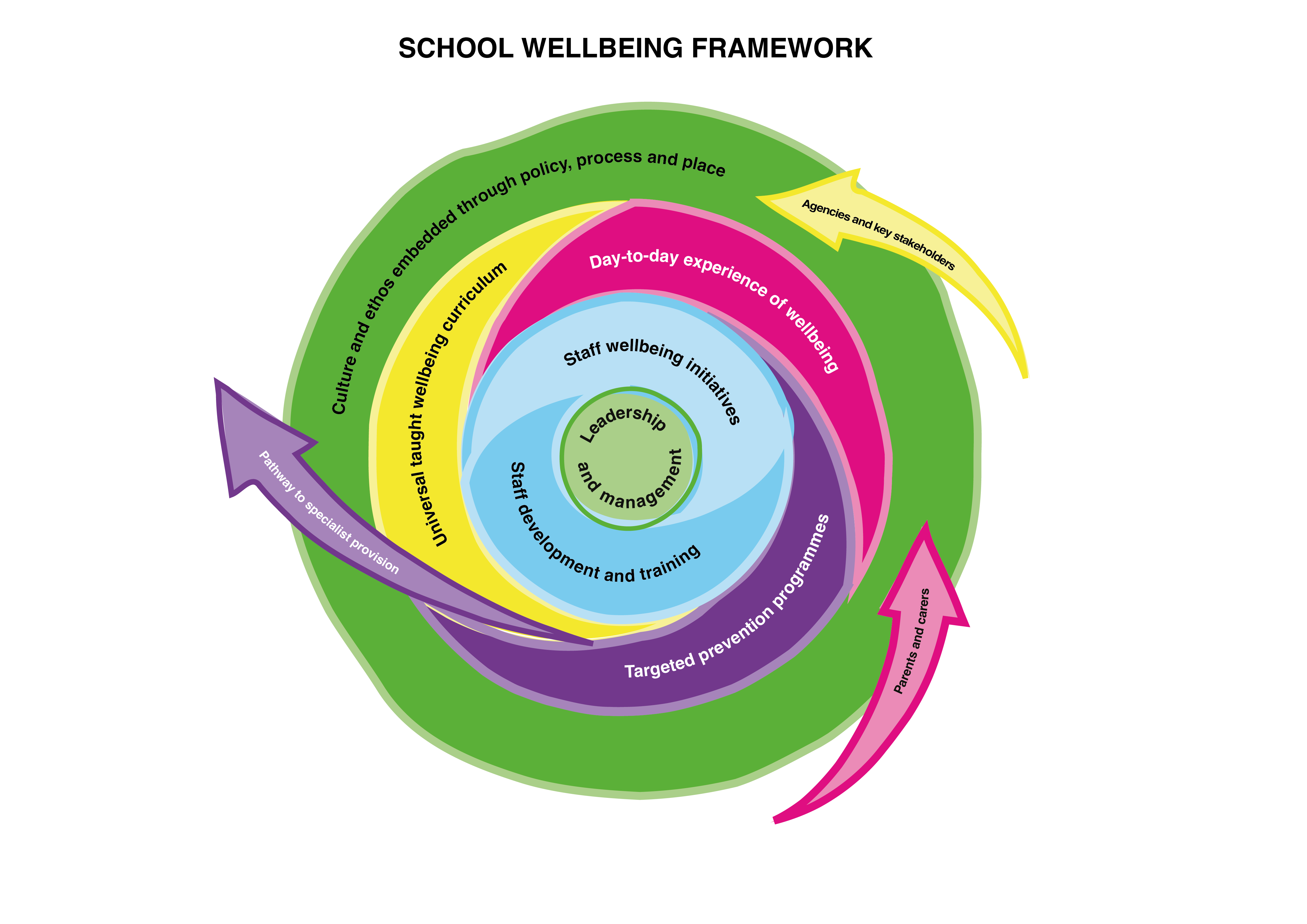
Odyssey Educational Trust’s journey is a prime example of turning wellbeing intentions into a unified, impactful strategy. Recognising the value of a consistent framework, they developed a bespoke mental health and wellbeing strategy with us that built on their established strengths, embedding wellbeing and resilience at every level.
Practical steps included:
Hazlehurst Community Primary in Bury, Greater Manchester, demonstrates the power of day-to-day practical strategies in building a flourishing school environment. With support and resources from the Wellbeing Club, Headteacher Anne Marie Knowles and her team embedded the SEARCH approach into everything they do.
Highlights include:
These strategies not only improved children's emotional wellbeing but also reduced behavioural issues and built a stronger, more connected school community. As Headteacher Anne Marie shared, “We want our children to be happy. Unless you’ve got happy children, they’re not going to learn.”
These stories prove that a strategic, framework-based approach—supported by practical, everyday actions—can make wellbeing a genuine part of primary school life, benefitting pupils and staff alike.
A robust school wellbeing strategy is not just beneficial for your pupils; it is also crucial for meeting the requirements of the latest Ofsted Education Inspection Framework (EIF).
Ofsted inspectors look for a "suitable and coherent programme of personal development." A strategic approach to wellbeing, using a framework like SEARCH, provides clear evidence that your school is proactively supporting pupils to "develop the knowledge and skills they need for participation and success in later life." It shows you are helping them thrive, not just survive.
Effective leadership is key. The EIF assesses whether leaders ensure staff have the knowledge and expertise to teach the personal development programme. Investing in staff training for wellbeing is therefore critical. When leaders prioritise staff wellbeing, it has a direct impact on the quality of interactions with pupils. As Kerry Hill, Head Teacher at Eyres Monsell Primary, noted, "Staff need resilience as much as pupils."
Ofsted places a strong emphasis on inclusion. Inspectors look for evidence that leaders’ actions have a "transformational impact" on disadvantaged pupils and those with SEND.
Mental health and inclusion are intrinsically linked. A child who feels like an outsider or is struggling to cope emotionally cannot engage fully in learning. By creating an inclusive environment where wellbeing is prioritised, you reduce barriers to learning. Early prevention projects that normalise conversations about mental health and celebrate difference ensure that all pupils feel valued and understood.
Leading a strategic approach to wellbeing can feel like an enormous task, especially for busy school leaders or headteachers. Our Wellbeing Club is designed to give you the structure, resources, and support you need.
Wellbeing Club provides a practical roadmap to lead personal development and wellbeing in your school. You will gain access to:
As one member shared,"Creating a wellbeing strategy for primary schools means fostering an environment where both students and staff can thrive. It’s about embedding positive practices into daily routines and ensuring everyone feels supported and valued."
Empower your school community. Join the Wellbeing Club today and start building a sustainable culture of positive mental health in your primary school.
Discover how to effectively create a positive school environment with our tools and frameworks by joining our Introduction to School Wellbeing Webinar. Gain insights into building strategies that promote mental health and resilience for both students and staff.
Want to see what this looks like in practice? Explore our free example mini-course, showcasing practical applications and the positive impact of our approach. Sign up today and take the first step towards a thriving school community!



LAST UPDATED:
October 1, 2026
Discover what the research says about why pupils struggle to feel they belong at school, from weak staff relationships and peer exclusion to

LAST UPDATED:
September 16, 2026
How peer support builds wellbeing, inclusion and belonging in primary schools, meets Ofsted's inclusive personal development criteria.


.svg)


