✖

Updated:
March 12, 2026
Written By:
Liz Robson
As a Senior Mental Health Lead or school leader, you are constantly balancing the immediate needs of your students—attendance, behaviour, anxiety—with the strategic demands of the Education Inspection Framework (EIF). It can often feel like these are competing priorities. However, when we look closely at the "Personal Development" judgement, a clear solution emerges that addresses both student wellbeing and inspection criteria: Teaching Character.
Developing pupils’ character is not just a "nice to have" addition to your pastoral offer; it is a core expectation of the Ofsted EIF. More importantly, when implemented strategically, it provides the psychological scaffolding young people need to navigate the complexities of modern life.
In this post, we will explore how to move character education from a vague concept to a robust, evidence-based strategy. We will look at real-world examples from schools we have worked with, demonstrating how teaching character through both the curriculum and targeted coaching aligns perfectly with Ofsted’s requirements.
Character strengths represent the positive aspects of an individual’s personality that influence their thoughts, emotions, and actions, serving as the foundation for achieving one’s best self. Drawing from diverse fields such as literature, science, philosophy, and religion, Peterson and Seligman (2004) conducted extensive research to identify six universal virtues and 24 character strengths essential for fostering human flourishing. This work led to the development of the VIA Classification, which provides a reliable framework for identifying and understanding these strengths and virtues (Peterson & Seligman, 2004).

The six virtues identified are wisdom and knowledge, courage, humanity, justice, temperance, and transcendence. The 24 character strengths are organised within these virtues. According to research, applying these character strengths can have a significant positive impact on an individual's life. Studies indicate that leveraging one's character strengths can:
Integrating and teaching character strengths through the curriculum is a fundamental pillar of Positive Education. This approach focuses on helping students identify their innate qualities and learn how to apply them effectively across various contexts. Developing a "strengths-based language" is essential for fostering self-awareness, self-worth, and resilience in young learners (Seligman et al., 2009). When students are equipped with this vocabulary, they can adopt consistent strategies that bolster their emotional wellbeing and enhance their engagement with learning.
The teaching of character strengths serves as a foundation for improved academic attainment, achievement, and prosocial behaviour (Park & Peterson, 2008). Research suggests that the earlier children can identify and leverage these traits, the more likely they are to experience life satisfaction and lead fulfilled lives. Furthermore, early intervention in character development acts as a significant protective factor, reducing the long-term risk of mental health issues (Linkins et al., 2015).
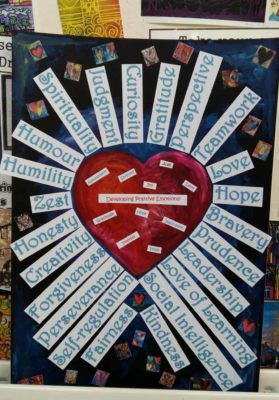
Developing character in students can be effectively achieved through both explicit and implicit teaching methods. Explicit teaching involves direct instruction where character traits such as resilience, empathy, or perseverance are intentionally taught through structured lessons and activities. This approach might include discussions, role-playing scenarios, or integrating specific character education curricula into the classroom. For example, teachers can design lessons that explore the importance of gratitude or teach conflict resolution strategies in a step-by-step manner.
On the other hand, implicit approaches focus on embedding character development into everyday school experiences and culture. Teachers serve as role models by demonstrating positive traits in their own behaviour, creating an environment where students naturally absorb these chariteristics. Additionally, fostering a supportive and inclusive classroom atmosphere — where collaboration, respect, and kindness are prioritised — allows students to practice these traits in real-life contexts.
Strategic initiatives, such as peer mentoring schemes and enrichment activities, play a key role in fostering pupils' personal development by promoting teamwork, problem-solving skills, and a sense of civic responsibility.
Combining explicit and implicit strategies ensures a well-rounded approach to character education, building not only students’ awareness of values but also their application in real-world scenarios. This holistic approach helps cultivate resilient, ethical, and emotionally intelligent individuals equipped to thrive both academically and personally.
The Ofsted School Inspection Toolkit is explicit about the importance of character. Under the Personal Development judgement, inspectors look for evidence that schools are:
"Whether the school promotes pupils’ wider development, character and well-being, ensuring that they receive the care and support to achieve and thrive, in school and beyond"
"Developing pupils’ character so that they reflect wisely, learn eagerly, behave with integrity and cooperate consistently well with others" (Ofsted, 2025).
This definition moves beyond simple compliance. It asks schools to actively cultivate traits—often referred to as virtues or strengths—that foster autonomy and resilience. This aligns directly with the science of Positive Psychology, specifically the work of Peterson and Seligman (2004) on the VIA Classification of Character Strengths. By teaching students to identify and use strengths like bravery, perseverance, and kindness, schools provide them with a toolkit for self-regulation and mental health.
For character education to be effective, it cannot be siloed in a single PSHE lesson or an occasional assembly. It must be woven into the fabric of the school culture. This is often referred to as a "Universal" or Tier 1 intervention—something that benefits every child.
Inspectors want to see a "coherent programme" of personal development. A whole-school approach demonstrates intent and implementation at a strategic level. It shows that you are proactively equipping all students, including those who are disadvantaged, with the cultural capital and emotional skills they need to thrive.
The Odyssey Educational Trust in Leicester provides a powerful example of embedding character and wellbeing into the primary curriculum. Working with Worth-it, they moved beyond ad-hoc activities to a structured framework.
The Strategy:
The Impact:
This approach created a culture where wellbeing was visible in daily school life, meeting the EIF requirement to "promote an inclusive environment" where all pupils can thrive together.
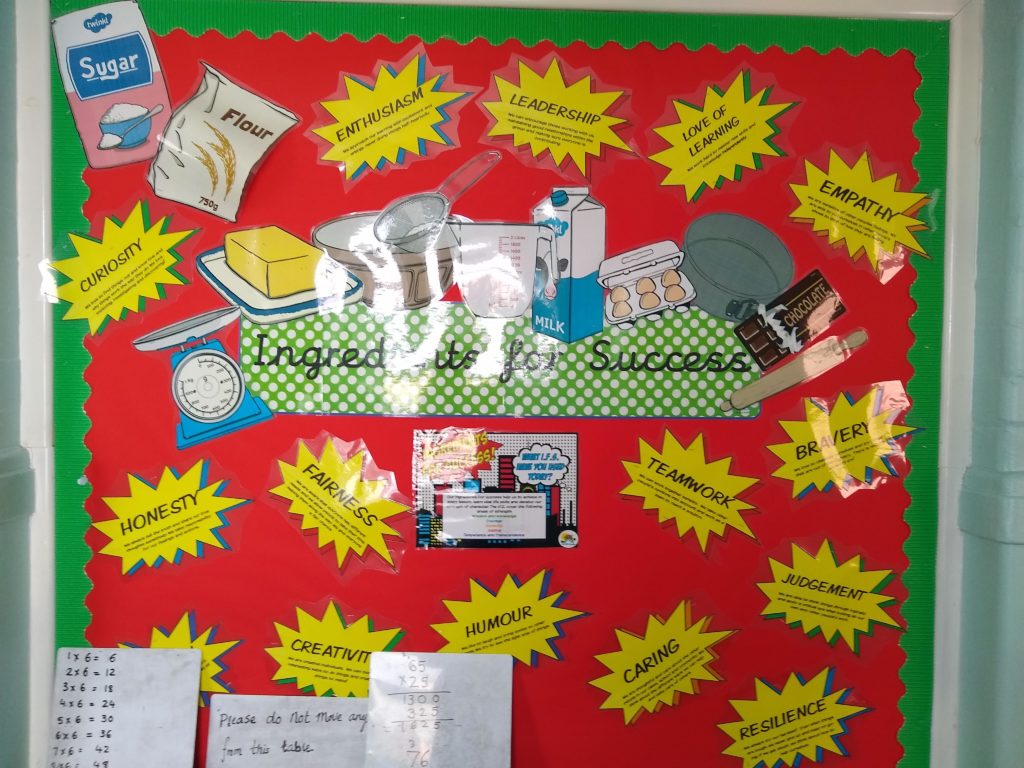
Hazelhurst Primary has integrated the character strengths framework from the Wellbeing Club into its wellbeing curriculum to create a school culture that prioritises mental health and happiness. Initally the school is introducing seven character strengths, which are the focal point throughout the academic year. Each strength is introduced in assemblies, linked to a carefully chosen book that exemplifies the strength, and then reinforced through engaging learning activities designed to deepen understanding and application.
Implementing a universal wellbeing curriculum has had a profound and tangible impact on our school community. The ripple effect of this approach is evident in the classroom atmosphere. Pupils are more empathetic and observant, often stepping in to support friends who may be struggling before any adult intervention is required. This peer-driven dynamic not only boosts individual resilience but also strengthens the sense of belonging within the school.
At the secondary level, Lutterworth High School faced challenges with student resilience, which was creating a strain on pastoral staff.
The Strategy:
Through this strategy, Lutterworth High School has seen a significant improvement in student resilience and a decrease in mental health issues. This approach not only alleviated the pressure on pastoral staff but also created a sense of connection and empathy among students.
The Impact:
This strategic shift contributed to an "Outstanding" Ofsted judgement, with the report describing their mental health provision as "phenomenal". By integrating explicit teaching of character into the curriculum, they demonstrated that personal development was a driver for academic success, not a distraction from it.

While a strategic approach is vital, some students require more. This is where targeted support (Tier 2) comes in. For students struggling with attendance (EBSA), anxiety, or low self-esteem, broad curriculum teaching may not be enough.
This is where Coaching for Character becomes a game-changer. Unlike mentoring, which often involves giving advice, coaching empowers the young person to identify their own solutions using their character strengths.
The EIF specifically considers how schools support pupils with SEND and those facing barriers to learning. Targeted coaching provides robust evidence that you are:
Targeted coaching interventions focus on helping specific students identify their "signature strengths." For a student with low attendance, a coach might help them realise they possess the strength of "bravery" or "hope."
Using an evidence-based coaching model, the student learns to apply these strengths to their specific challenge. For example, using "bravery" to step through the school gates, or "curiosity" to engage with a difficult subject. This shifts the dynamic from the school "fixing" the student to the student developing agency and self-efficacy.
Coaching is also highly effective for targeted groups. Lutterworth High School implemented a "Resilience Mentoring" programme.
The Strategy:
The Impact:
This approach significantly reduced the workload on the central pastoral team. Because students were empowered to resolve lower-level issues themselves using their character strengths, pastoral leads could focus on those with more complex needs. This demonstrates effective leadership and management to inspectors, showing that you are using resources efficiently to support staff wellbeing and workload.
To successfully demonstrate to inspectors that your school is teaching character effectively, you need a "golden thread" that connects your strategic intent with the lived experience of the child.
By adopting this dual approach—broad curriculum teaching alongside targeted coaching—you ensure that "Personal Development" is not just a box to be ticked, but a lived reality that supports every child to flourish.
Are you ready to move beyond reactive pastoral care and start building a strategic culture of character?
We can support you to develop the skills to run your own coaching-based interventions that meet Ofsted requirements.



LAST UPDATED:
September 16, 2026
How peer support builds wellbeing, inclusion and belonging in primary schools, meets Ofsted's inclusive personal development criteria.

LAST UPDATED:
September 14, 2026
This guide for new Wellbeing Ambassador Facilitators helps know what to expect when they first join and make the most out of the programme.


.svg)


